 Skip to content
Systeme.io Funnel Launch School: Learn How to Start Using Systeme.io 10 in Minutes
We use affiliate links and may receive a small commission on purchases (at no extra cost to you). Learn more.
Welcome to my in-depth Systeme.io tutorial!
In this tutorial, I will take you through creating and optimizing a sales funnel using Systeme.io.
Systeme.io is a powerful all-in-one marketing platform designed to help you build sales funnels, automate email marketing, and sell products online.
In this tutorial, I will cover everything you need to know to start with Systeme.io, including setting up your account and creating and customizing your funnel.
Let’s dive in!
Part 1: Get a Systeme.io Account
1.1. Visit the Systeme.io website
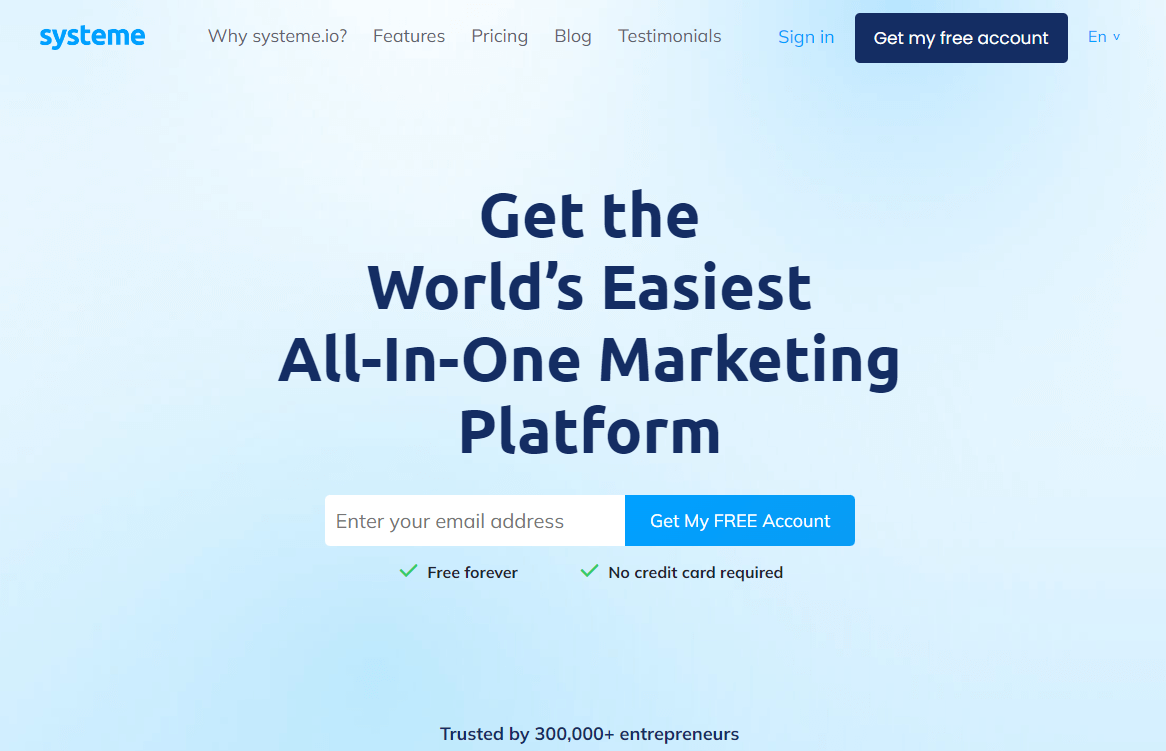
Go to https://systeme.io/ and browse the available information to familiarize yourself with the platform’s features and benefits.
1.2. Choose a plan that suits your needs
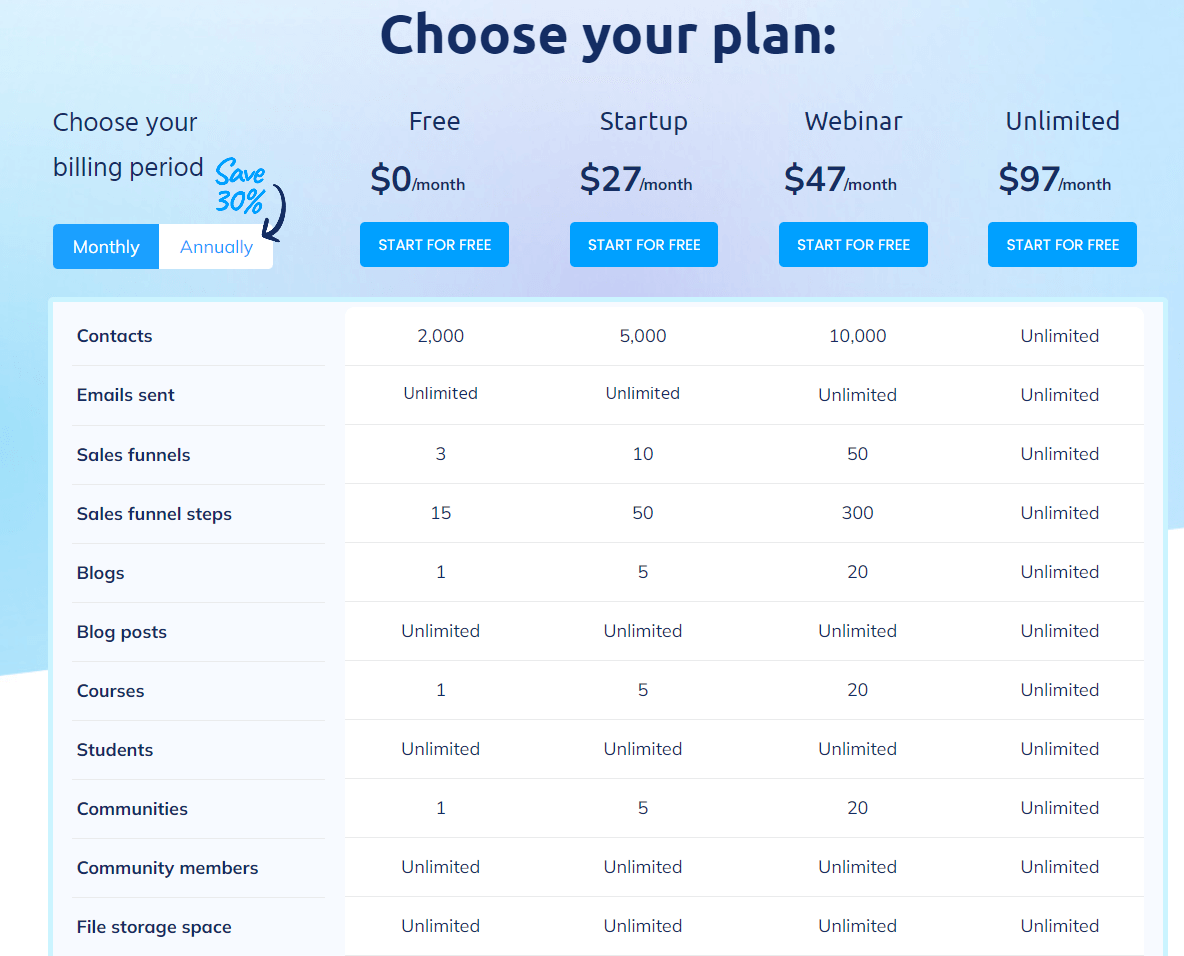
Systeme.io offers several pricing plans to cater to different business sizes and requirements.
Compare the plans to find the best fit for your needs.
Take the opportunity to try at least the free plan that this platform offers.
This way you will be able to make sure that Systeme.io meets your expectations and if you see the need to upgrade later.
1.3. Register for an account
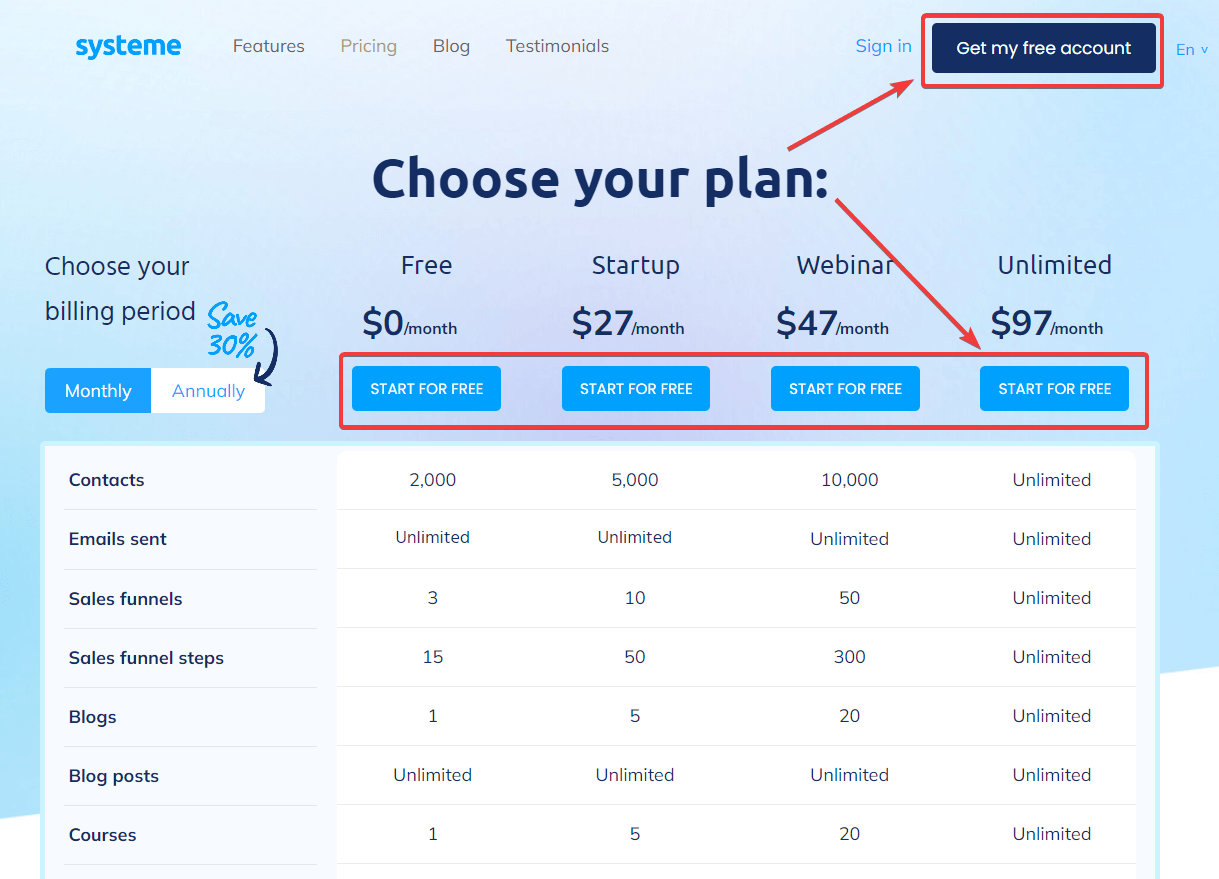
Click the “Start for Free” or “Get my free account” button and provide your email address to create your account.
1.4. Confirm your email address
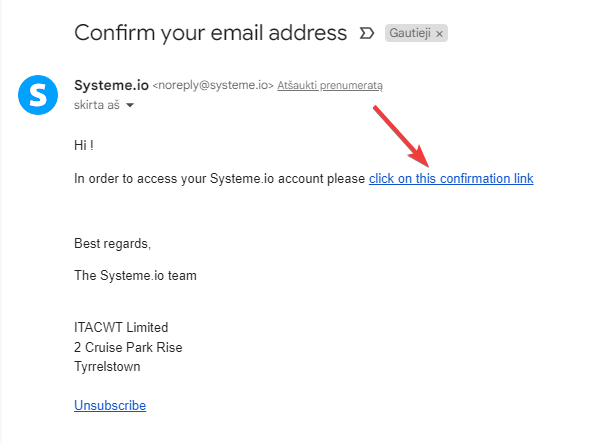
Check your inbox for an email from Systeme.io with a confirmation link.
Click the link to verify your email address and gain access to your account.
1.5. Complete your profile information
Log in to your Systeme.io account and navigate to the “Profile” section under “Settings“.

Enter your business details, contact information, and timezone preferences.
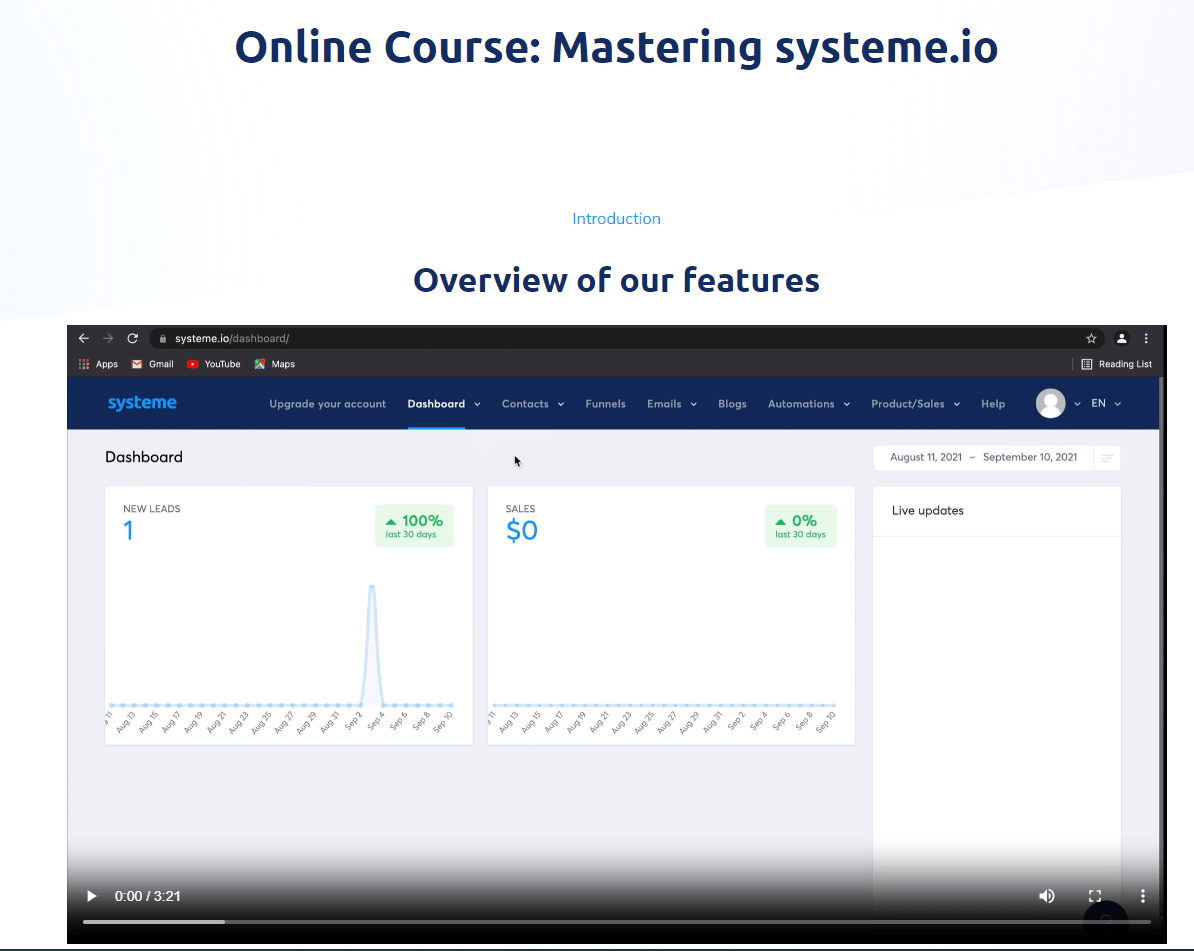
Part 2: Setting up a Systeme.io Account
2.1. Connect your domain
If you have a custom domain, go to the “Custom domains” section under “Settings” to connect it to your Systeme.io account.
Click on the “Add domain” button to connect your custom domain.
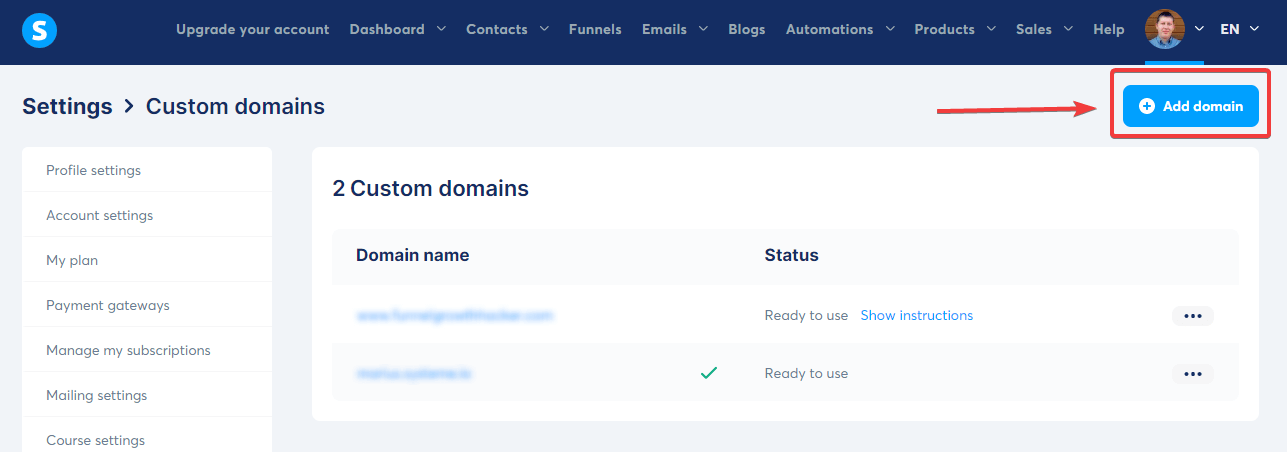
In the window that opens, enter your domain name (must include www) and then a second popup will open where you can see your DNS records.
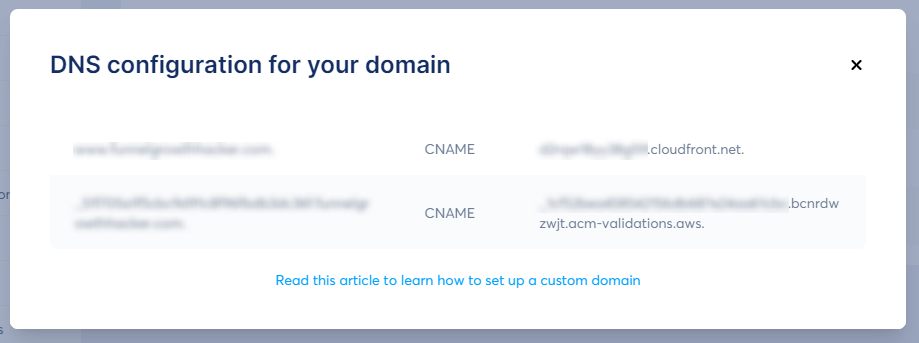
You will need to submit these records to your domain registrar.
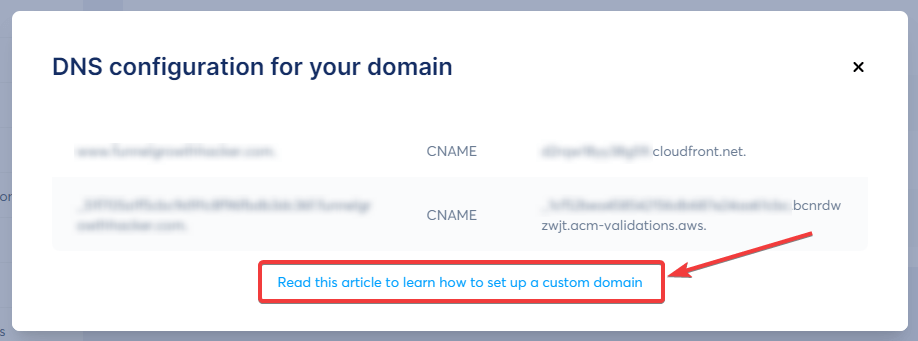
If you don’t know how to do it exactly, click on the link at the bottom of the popup, which will take you to a detailed guide explaining how to do it step-by-step.
2.2. Set up your payment gateway
Connect your preferred payment gateway, such as Stripe or PayPal, to enable secure transactions.
Just go to the “Settings” area, then “Payment gateways“, and after choosing which payment gateway you want to connect, press the “Connect” button and follow the instructions.
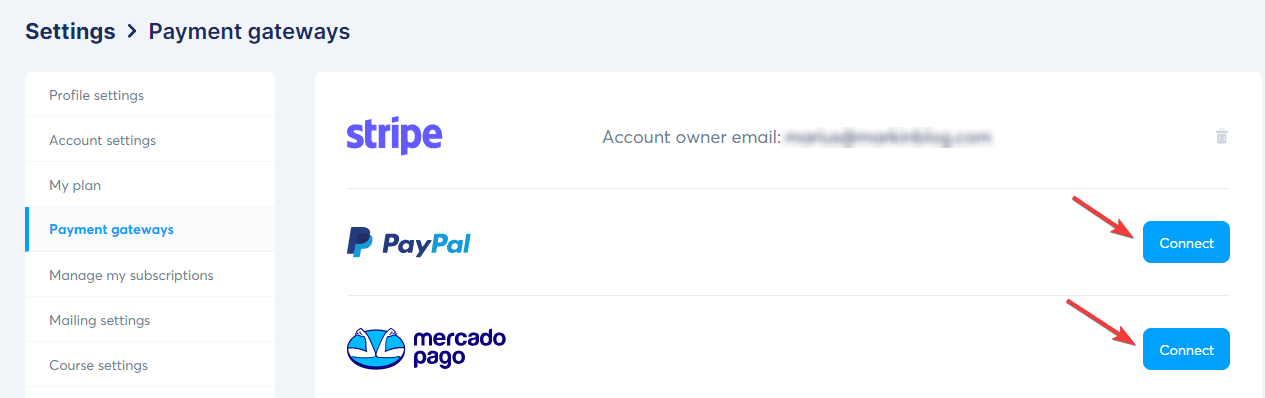
To ensure that your payment gateway is correctly connected, you can create a test product in Systeme.io and attempt to make a test purchase.
If the transaction is successful, your payment gateway is set up correctly.
Part 3: Creating a Sales Funnel
3.1. Define your funnel goals
Go to the “Funnels” tab and click the “Create” button.
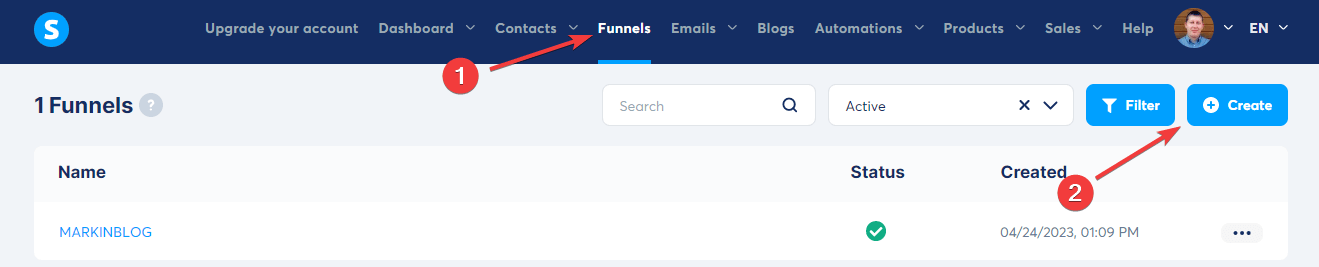
In the popup window that opens, enter your Funnel name, choose which domain you will use for that funnel, set what your funnel goal will be, and what your preferred currency.
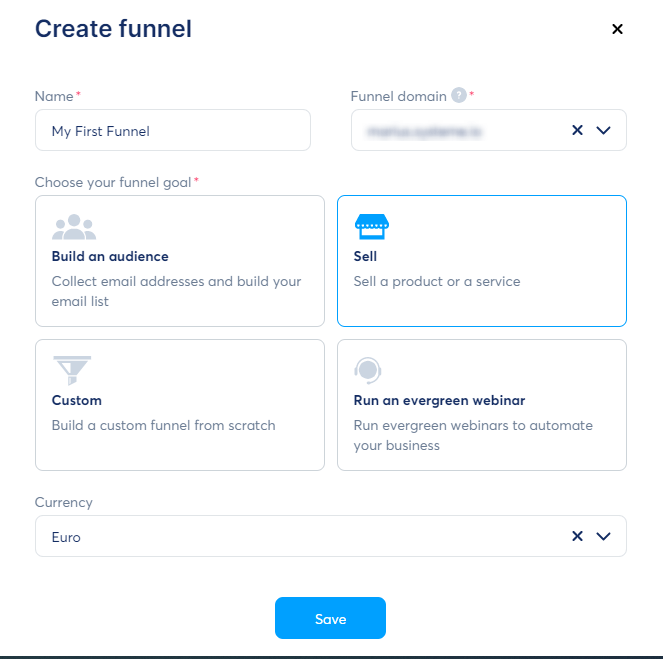
After entering all this data and pressing the “Save” button.
3.2. Choose a funnel template
Systeme.io provides pre-built funnel templates to suit various goals.
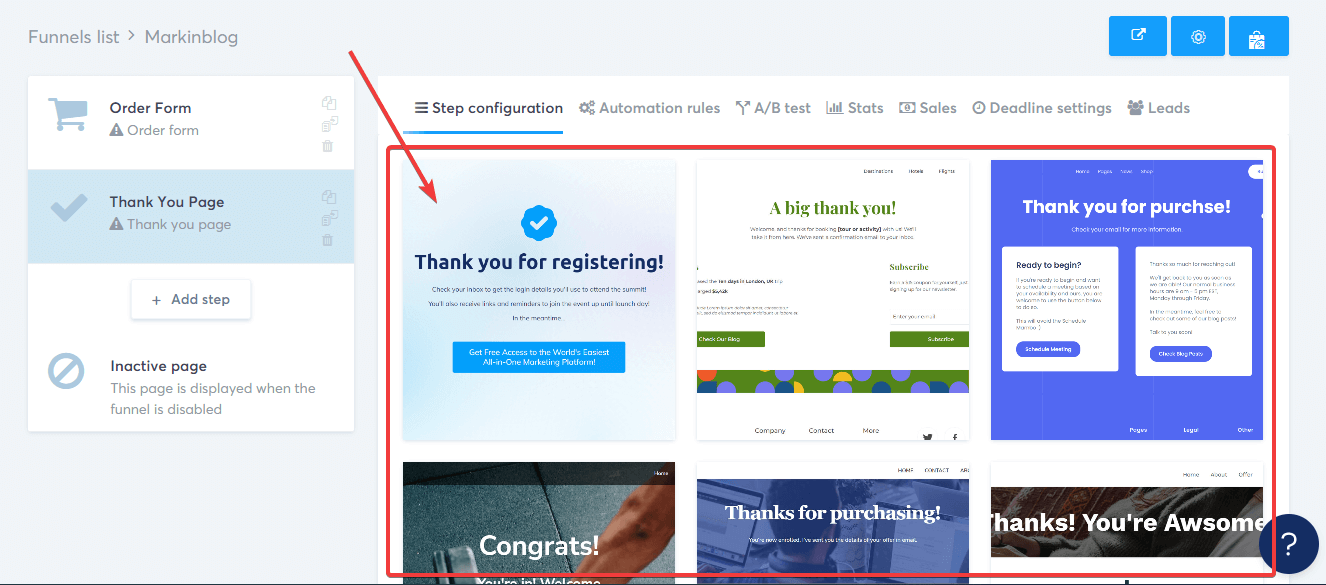
Select one that aligns with your objectives.
3.3. Customize your funnel steps
Add, delete, or modify steps in your funnel to match your marketing strategy.
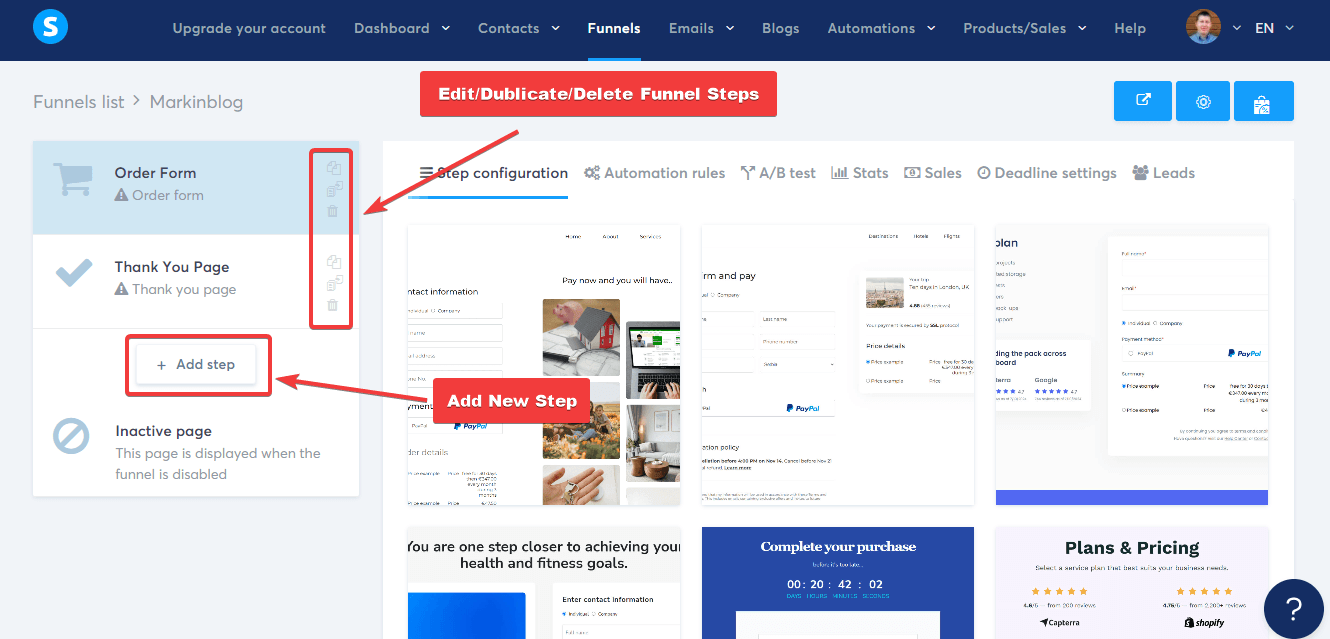
This may include landing pages, sales pages, checkout pages, and thank-you pages.
Part 4: Building Your Funnel Pages
4.1. Customize your page design using the drag-and-drop editor
Choose which funnel you want to edit and click on the “Edit page” button to access the editor of the page.
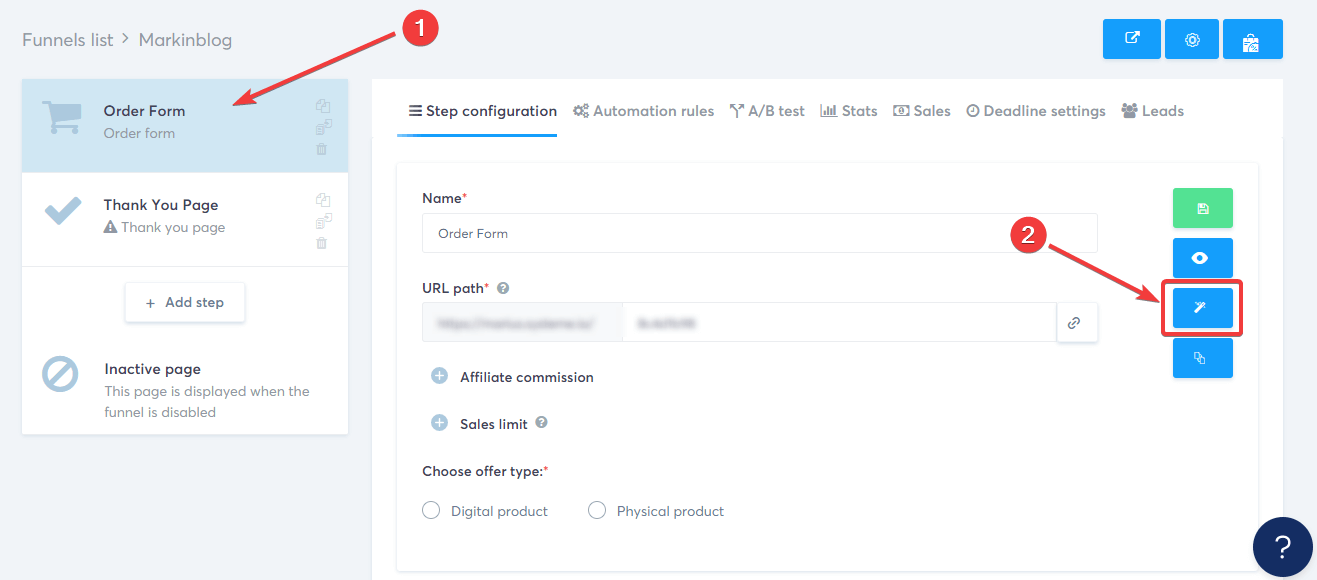
Then modify your pages by simply dragging and dropping elements like text, images, and forms.
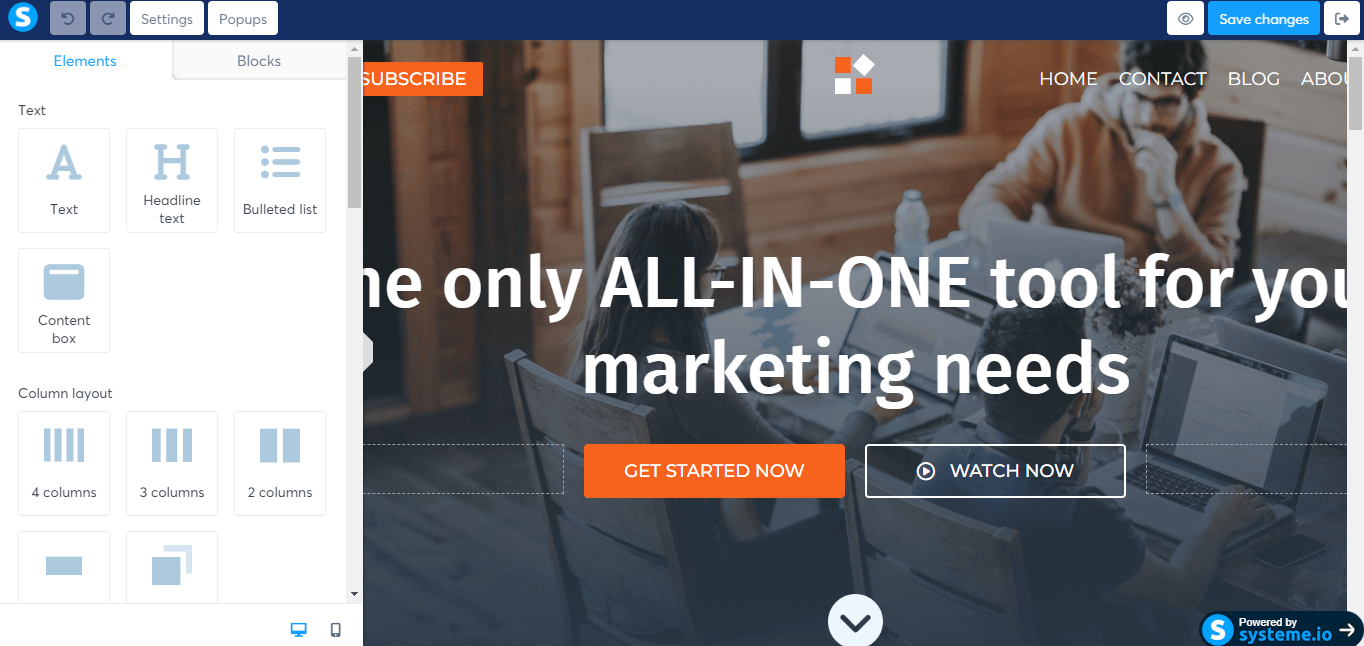
4.2. Add and edit page elements
Insert various elements like headlines, images, videos, buttons, and forms into your pages.
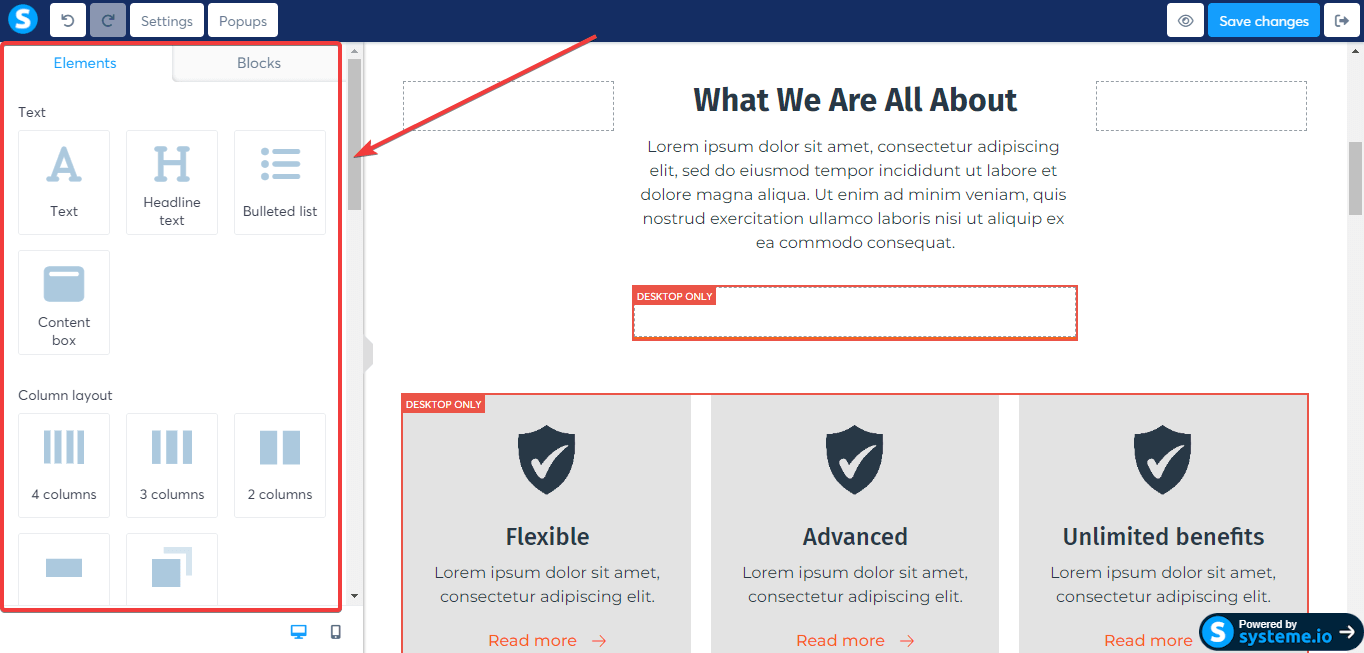
Customize each element by adjusting fonts, colors, sizes, and other properties.
4.3. Optimize your pages for SEO
Improve your search engine rankings by adding meta titles, descriptions, and keywords to each page.
To do so, go to the editor of your page, and on the left panel of the editor, click on “Settings”.
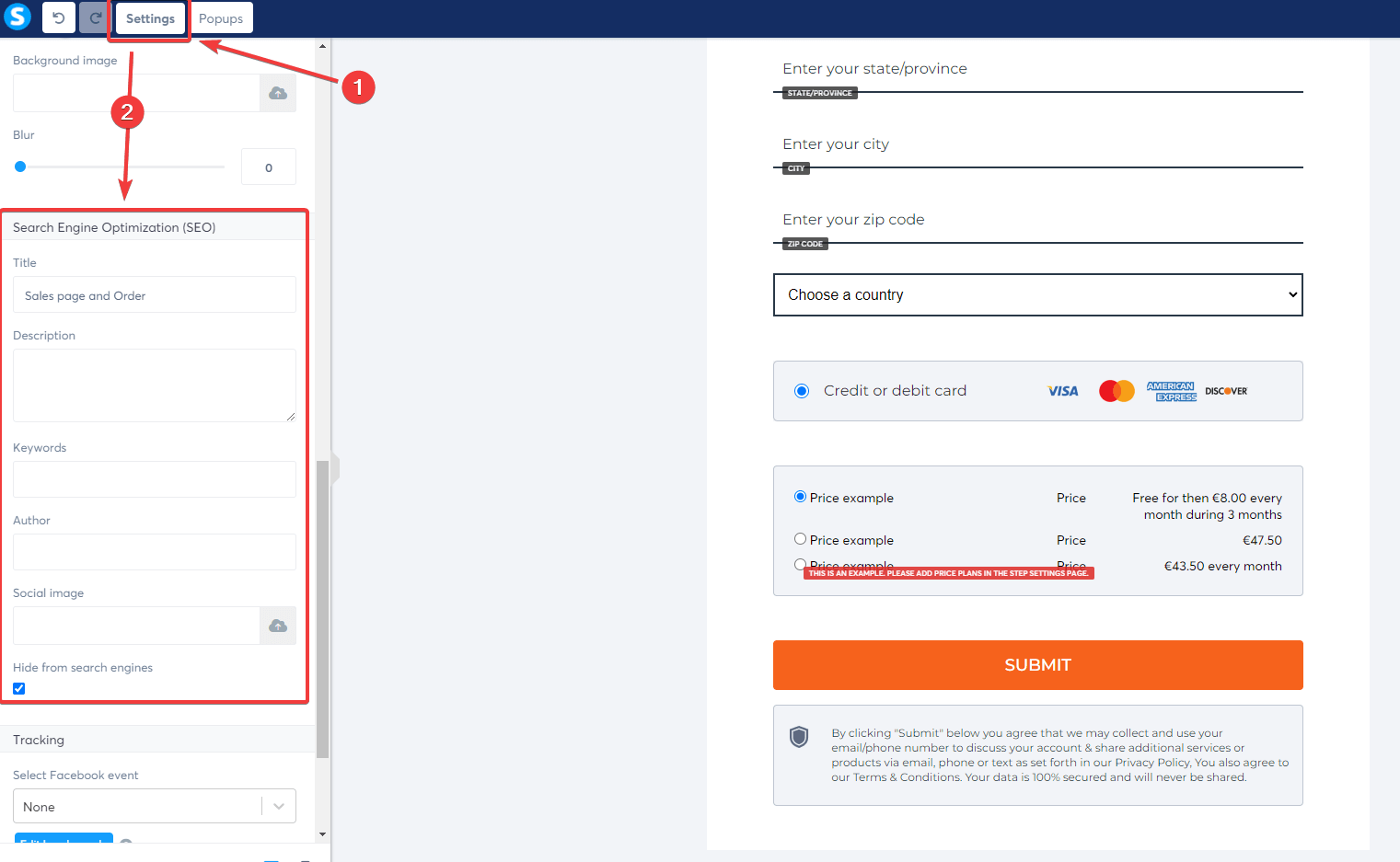
And drag the page down until the “Search Engine Optimization (SEO)” section appears
4.4. Preview and publish your pages
Use the “Preview” button to see how your pages will appear on different devices.
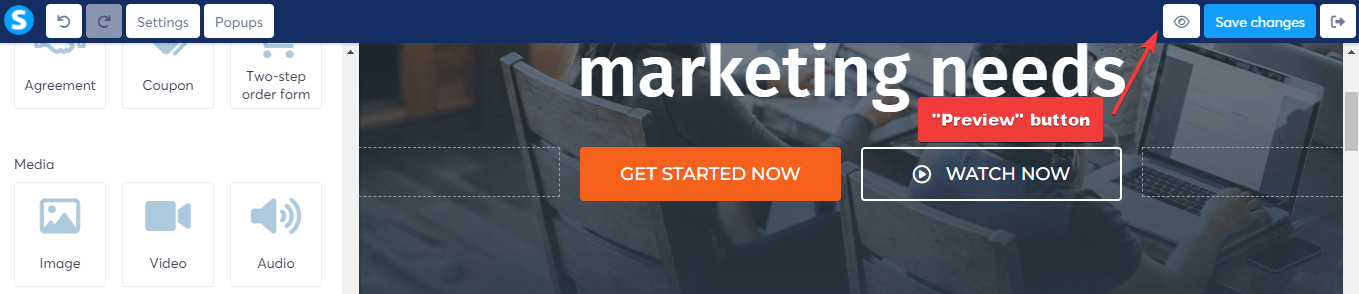
Once you’re satisfied with the design, click the “Publish” button to make your pages live.
Part 5: Managing Your Contacts and Leads
5.1. Import existing contacts
Upload your existing contact list to Systeme.io using a CSV file.
This allows you to seamlessly integrate your new funnel with your existing marketing efforts.
To do so, just follow these step-by-step instructions:
- Prepare your contact list: Ensure that your contact list is in a CSV (Comma Separated Values) file format. The first row should contain column headers such as “email”, “first_name”, “last_name”, etc. Each subsequent row should contain the corresponding contact information.
- Navigate to the “Contacts” section: Once you’re on the dashboard, click on the “Contacts” tab in the main menu.

- Access the import contacts page: On the Contacts page, you’ll find a button labeled “Import contacts” at the top right corner. Click on this button to access the import contacts page.

- Choose the CSV file: In the import contacts page, click on the “Choose file” button and locate the CSV file containing your contacts on your computer. Select the file and click “Open”.
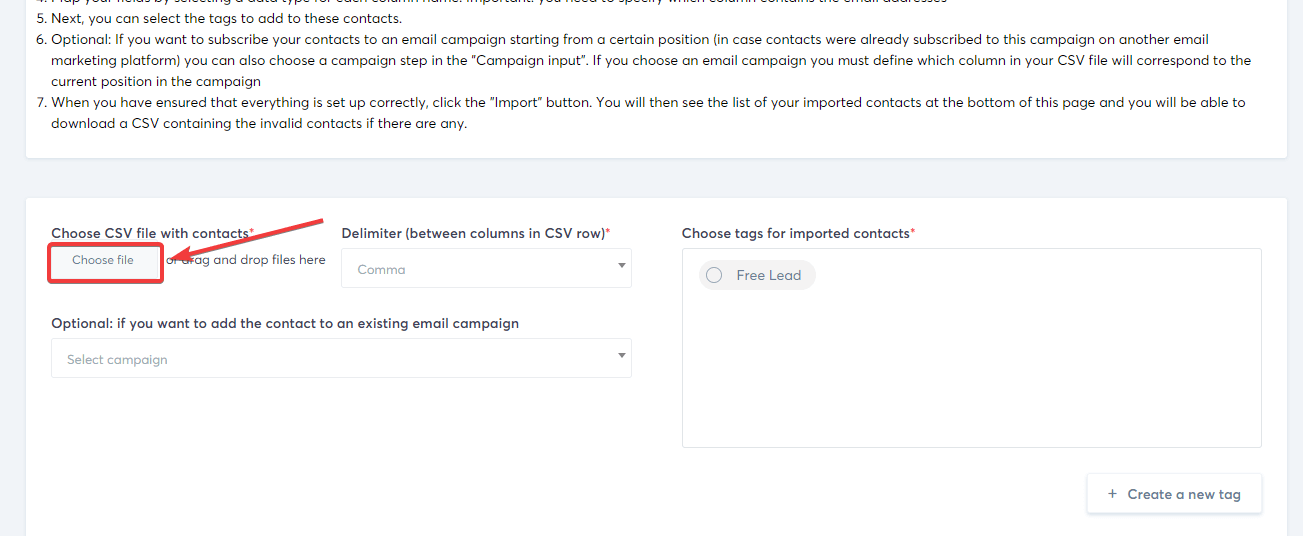
- Add contacts to a list (optional): If you want to add the imported contacts to a specific list in Systeme.io, select the list from the “Optional: if you want to add the contact to an existing email campaign” dropdown menu.
- Map the columns: Systeme.io will display a preview of your contact data. Make sure that the columns in your CSV file are correctly mapped to the corresponding fields in Systeme.io. For example, the “email” column in your CSV file should be mapped to the “Email” field in Systeme.io. Adjust the mappings as needed using the dropdown menus.
- Start the import process: Once you’ve mapped the columns and chosen a list (if applicable), click on the “Import contacts” button at the bottom of the page. Systeme.io will begin importing your contacts.
- Monitor the import progress: The import process may take some time, depending on the size of your contact list. You can monitor the progress on the same page. Once the import is complete, you’ll see a confirmation message.
5.2. Create and manage tags
Organize your contacts using tags based on factors like behavior, interests, or demographics.
This enables targeted marketing campaigns for better engagement and conversion.
Here’s a step-by-step guide on how to create and manage tags and segments in Systeme.io:
Creating Tags:
- Navigate to the “Contacts” section: Once you’re on the dashboard, click on the “Contacts” tab in the main menu.
- Access the “Tags” page: On the Contacts page, you’ll find a submenu with the option “Tags.” Click on “Tags” to access the Tags page.

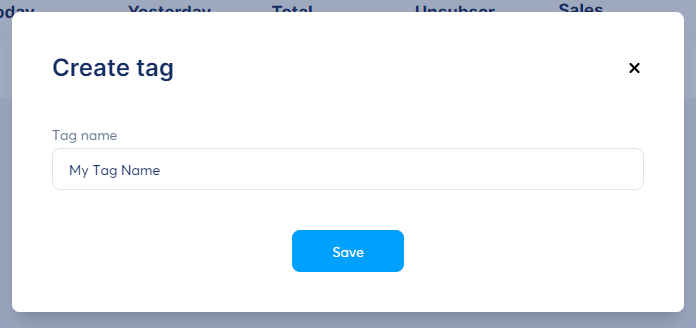
- Create a new tag: On the Tags page, click on the “Create” button located in the top right corner. A dialog box will appear.
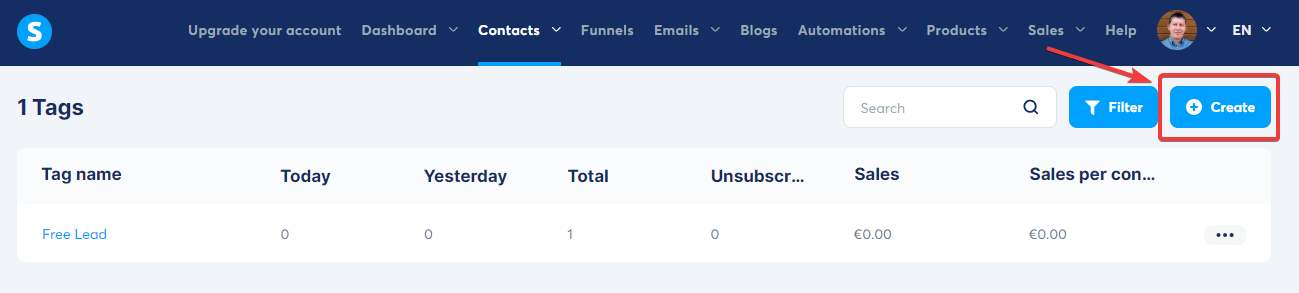
- Name your tag: Enter a descriptive name for your tag in the “Name” field of the dialog box. This name should help you identify the group of contacts the tag represents. Click on the “Save” button to save your new tag.
Managing Tags:
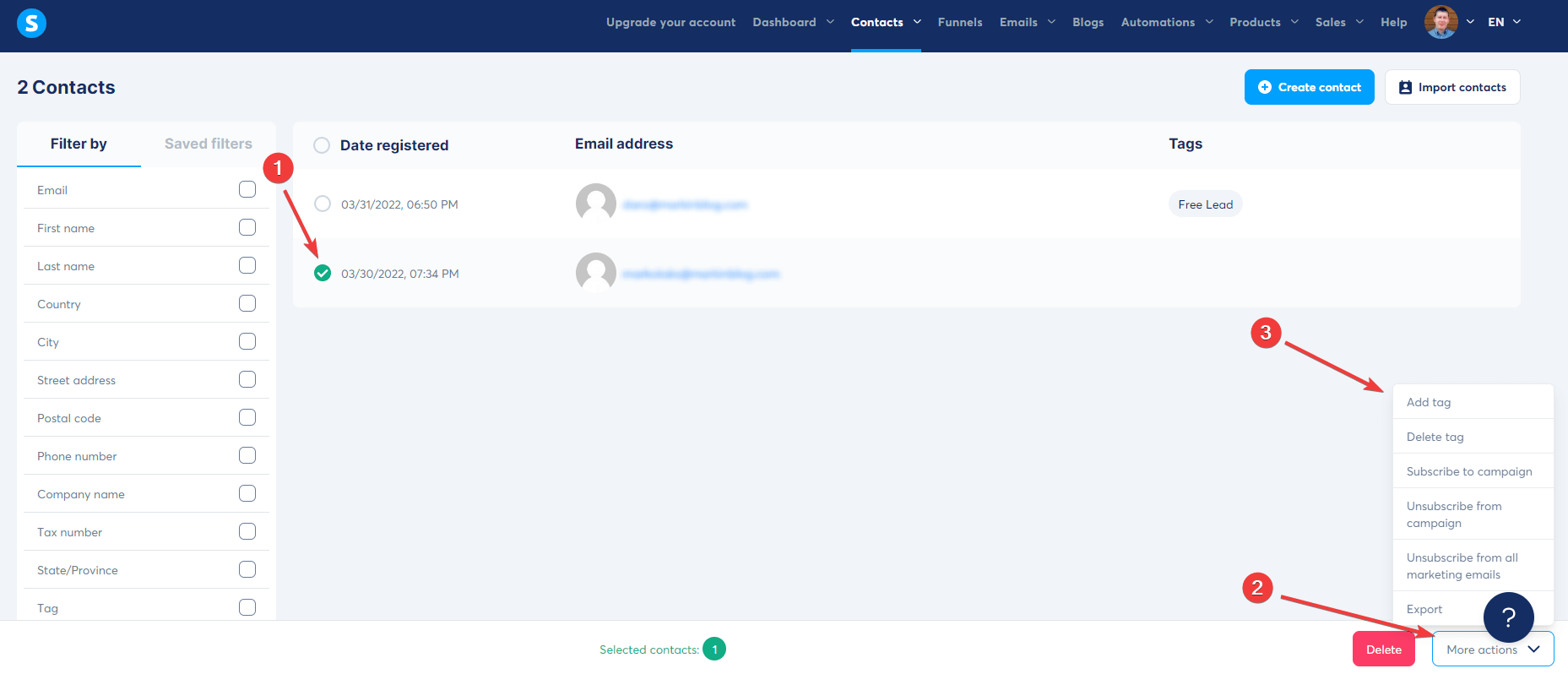
- Assign tags to contacts: To assign a tag to a contact, go to the Contacts page, find the contact you want to tag, and select the contact you want to edit. Then click on the “More Actions” button and choose the “Add tag” option.
A dialog box will appear where you’ll be able to choose the tag.
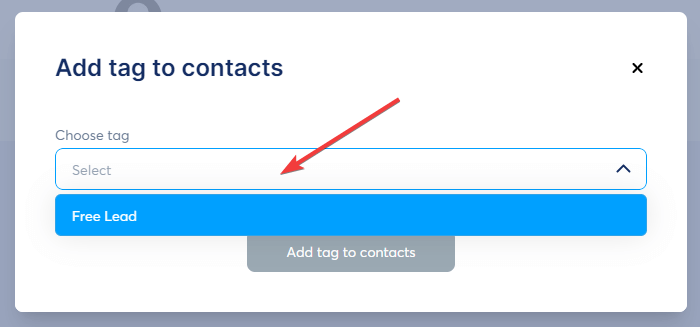
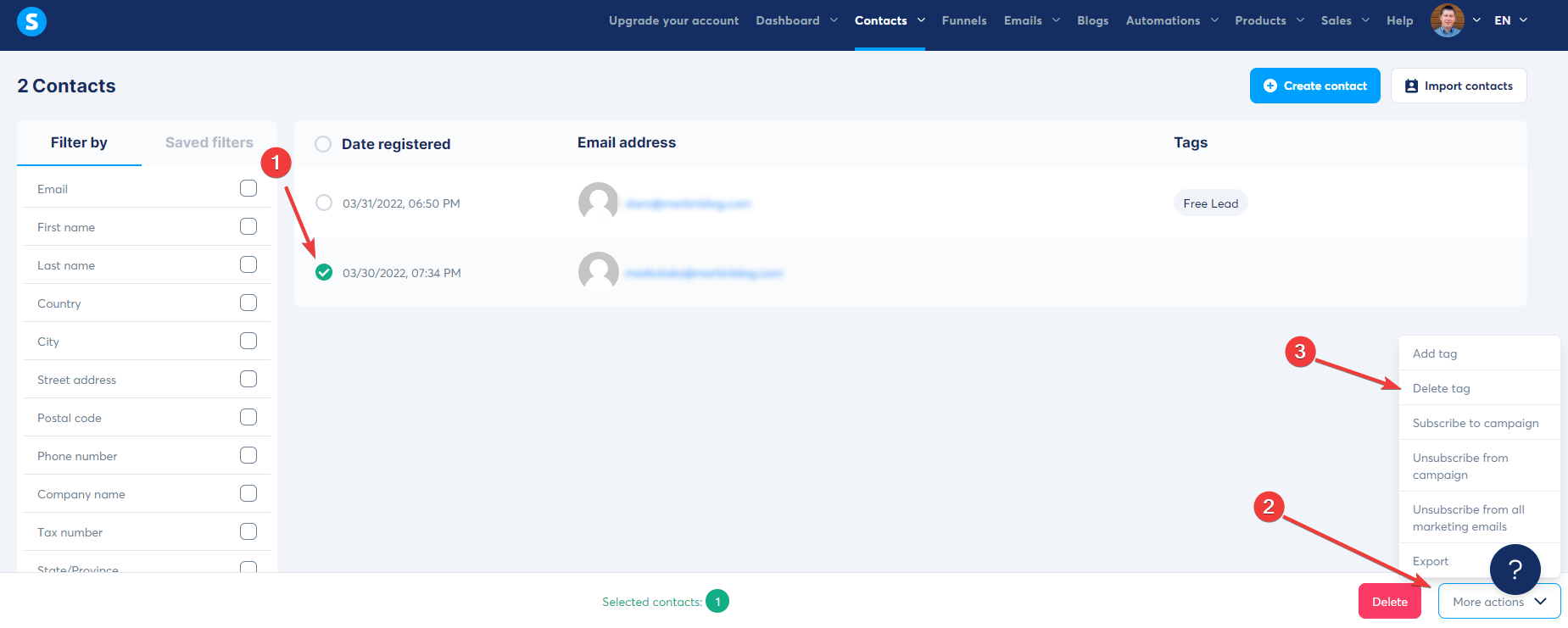
Click “Save” to update the contact with the assigned tag(s). - Remove tags from contacts: To remove a tag from a contact, follow the same steps as assigning a tag, but choose the “Delete tag” option after clicking the “More Actions” button.
5.3. Set up automation rules and workflows for lead nurturing
Create rules that trigger specific actions (e.g., sending an email or applying a tag) based on your contacts’ actions, such as visiting a page or clicking a link.
Here’s a step-by-step guide on how to set up automation rules and workflows using Systeme.io:
Creating Automation Rules:
- Navigate to the “Automations” section: Once you’re on the dashboard, click on the “Automations” tab in the main menu, then click on “Rules.”

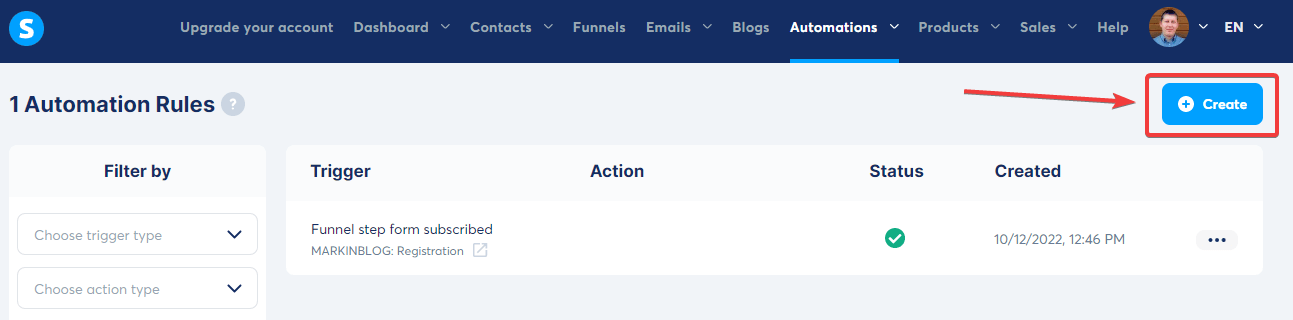
- Create a new automation rule: Click on “+ Create” to create a new automation rule.
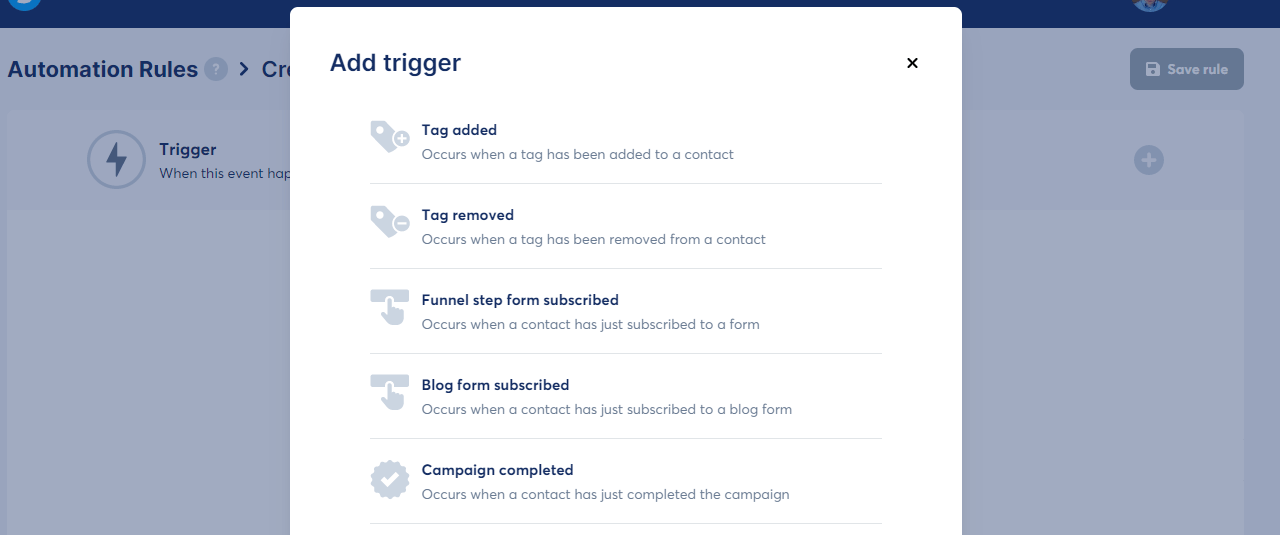
- Define the trigger: Click on the “+” button next to the trigger to choose an appropriate trigger based on your needs, such as “Funnel step form subscribed,” “New sale,” or “Tag added.”
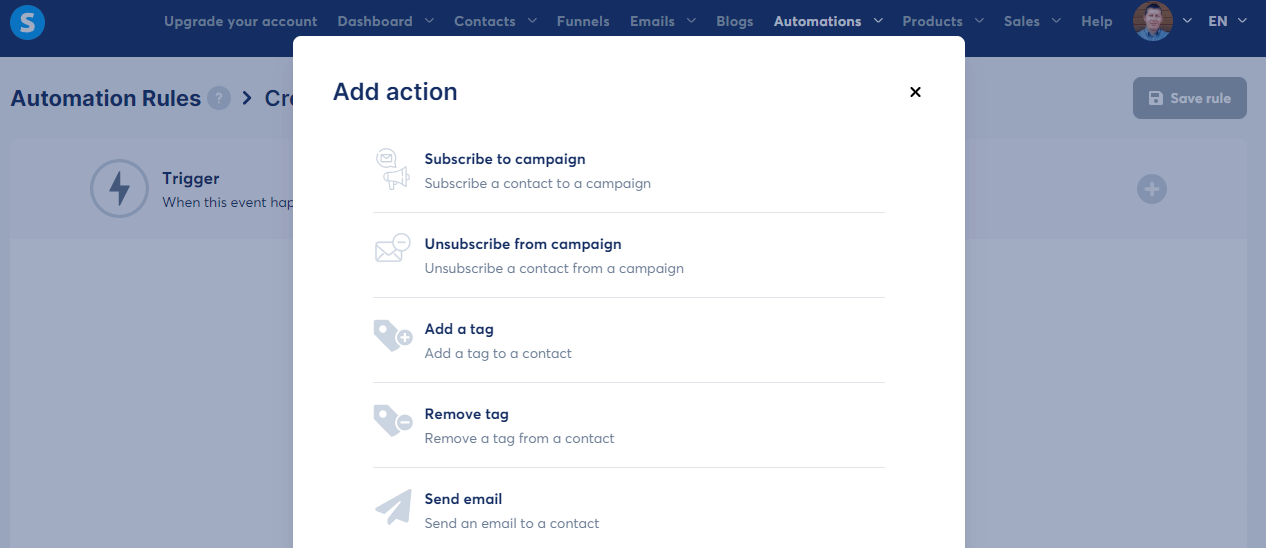
- Define the action: Click on the “+” button next to “Action” and select the appropriate action you want to perform, such as “Send an email,” “Subscribe to a campaign,” or “Add a tag.”
- Save the rule: Click on “Save Rule” at the bottom left to save your new automation rule.
Creating Workflows:
- Navigate to the “Automations” section: Click on the “Automations” tab in the main menu, then click on “Workflows.”

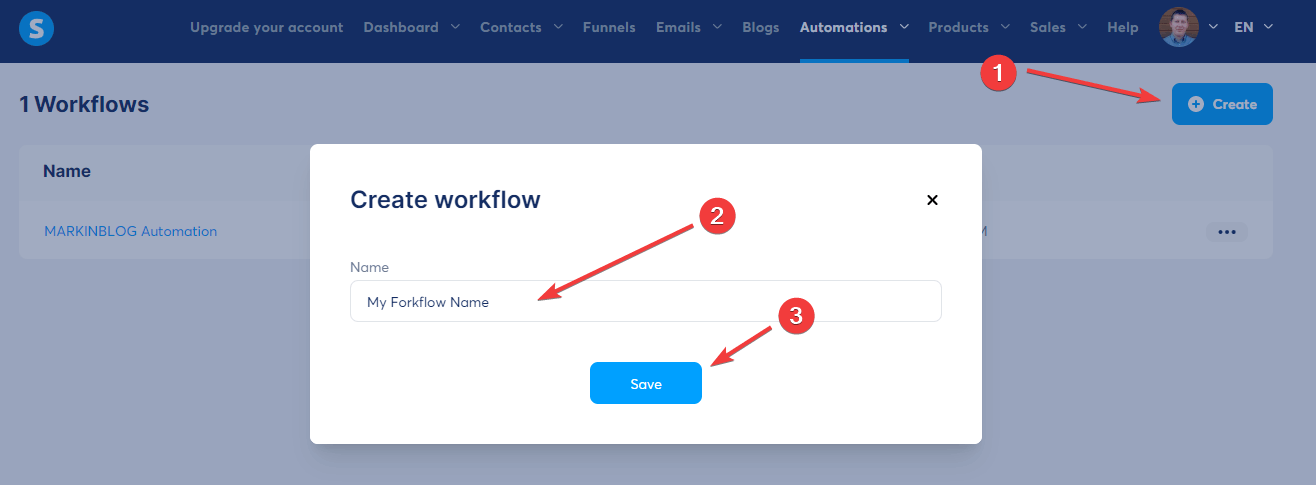
- Create a new workflow: Click on the “Create” button, add the name of your workflow, and click on “Save.”
- Add a trigger: Click on “Create your first trigger” and choose a trigger based on your needs, such as “Funnel form subscribed,” “New sale,” or “Tag added.”
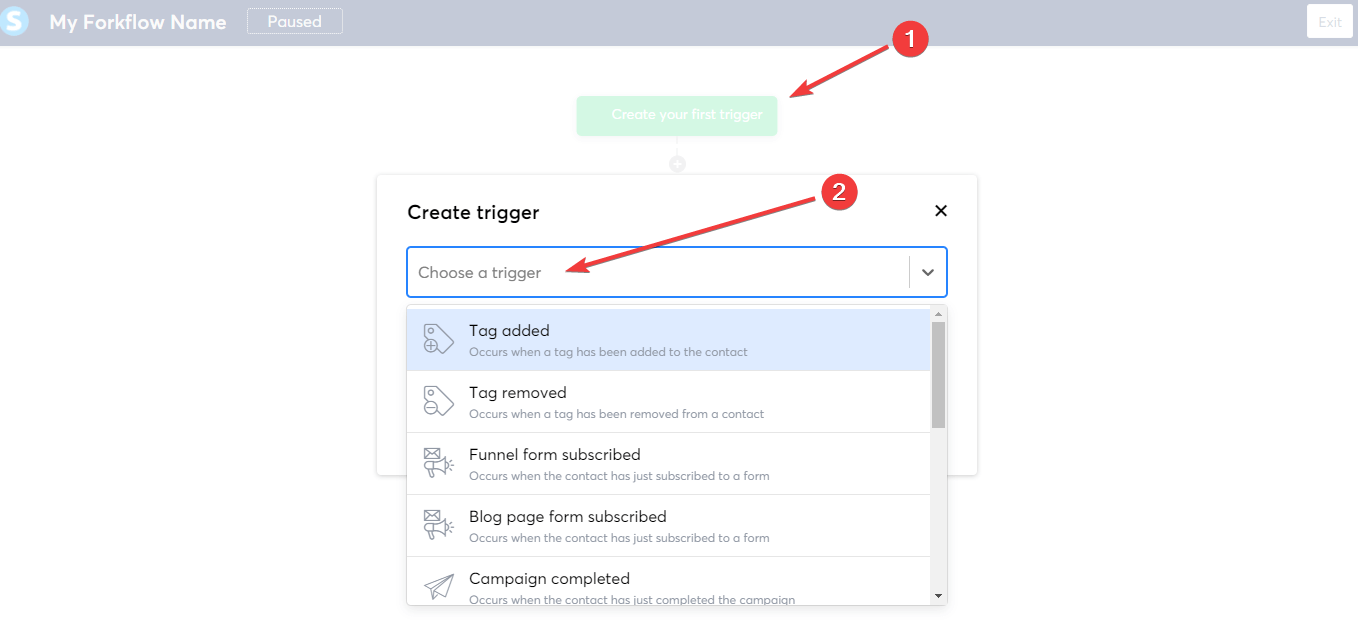
- Add steps: After choosing a trigger, click on “+” to choose the next step, which can be:
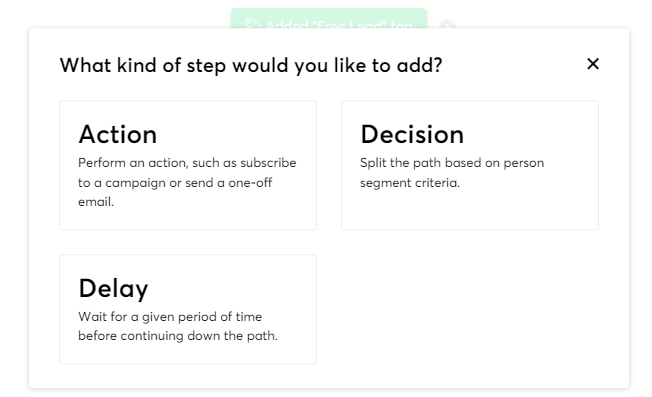 a. An action: Perform an action such as “Add a tag,” “Delete a tag,” “Subscribe to a campaign,” etc.
b. A decision: Divide the workflow path according to the criteria of the contacts, choosing the filter of your choice.
c. A delay: Sets a period of time before moving on to the next workflow step. - Configure the steps: Depending on the chosen step type, configure the settings as needed. For example, if you chose “Subscribe to a campaign” as an action, select the campaign you want the contact to be subscribed to.
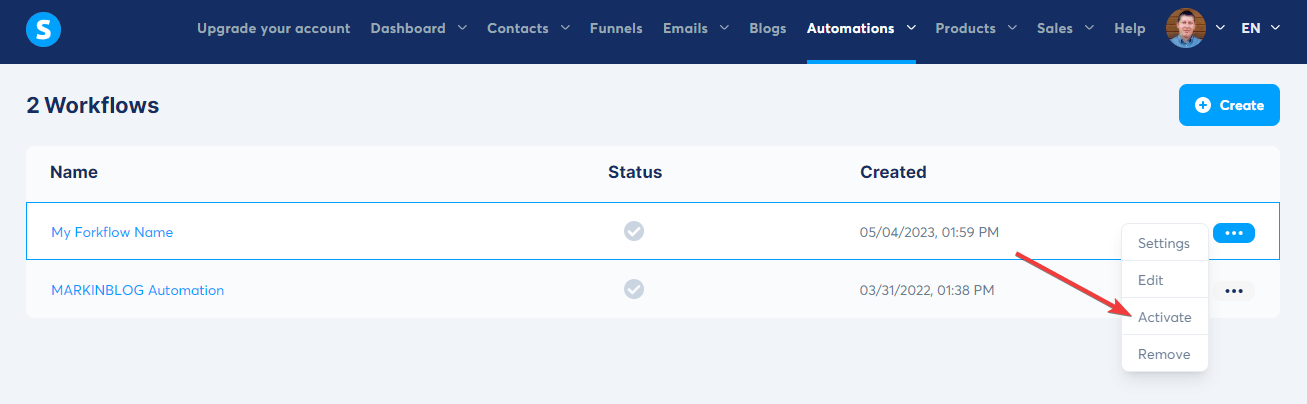
- Save and activate the workflow: Once you’ve configured all the necessary steps in your workflow, save it. To activate the workflow, return to the list of workflows and click on the “Activate” button next to your workflow.
Part 7: Additional Systeme.io Features
7.1. Create and sell online courses
Use Systeme.io’s built-in course creation features to design, host, and sell online courses to your audience.
Here is a step-by-step guide on how to create and sell online courses using Systeme.io:
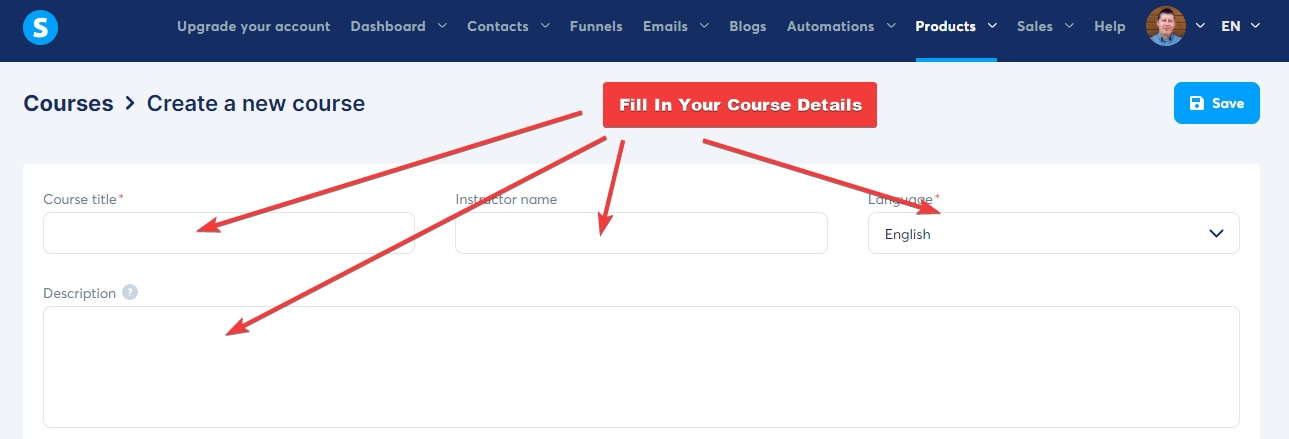
- Create a new course: In the main menu, go to “Products” and click on “Courses.” Then click on the “Add a new course” button.
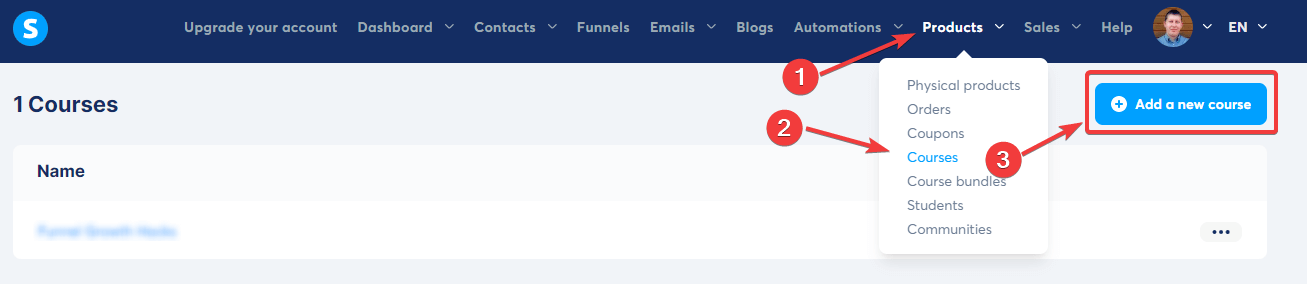 On the next page, add the relevant course details such as name, description, images, etc. Click “Save” to save your course settings.
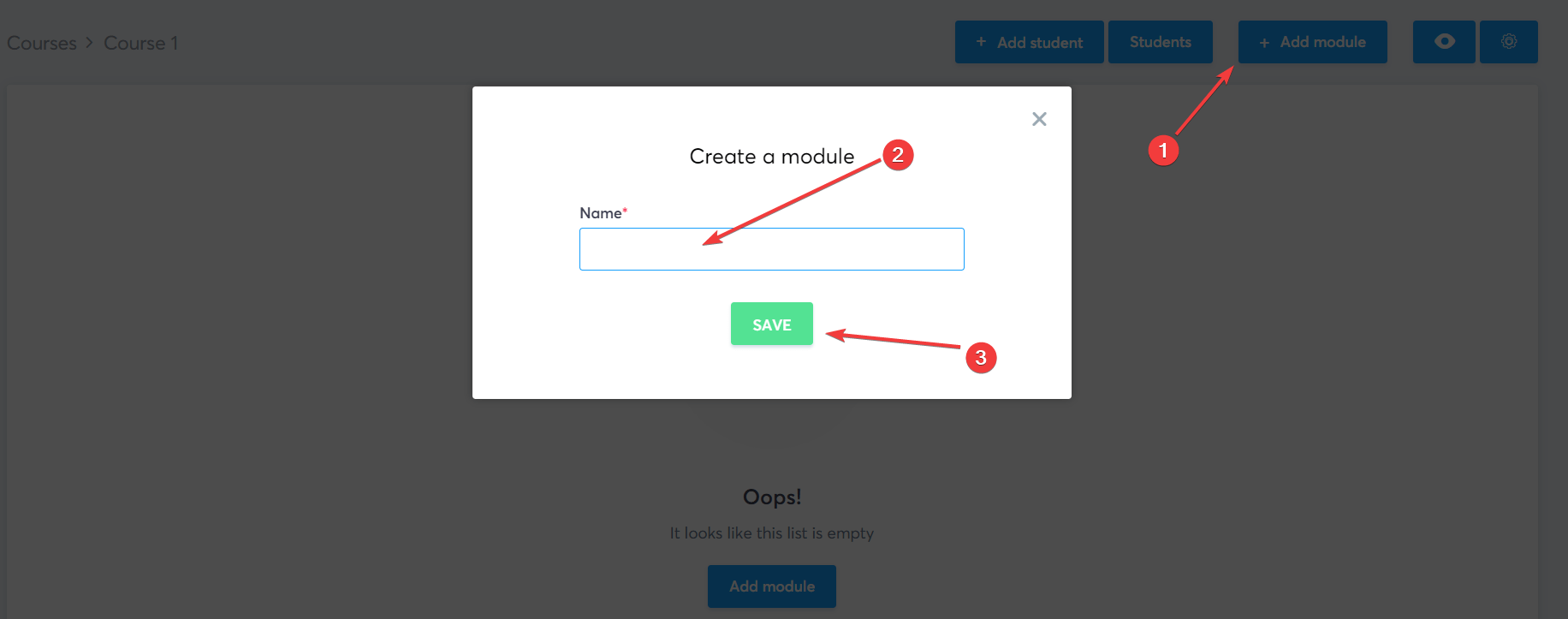
- Create a course module: With your course created, click on the “Add module” button. Enter the name of your module and click “Save.”
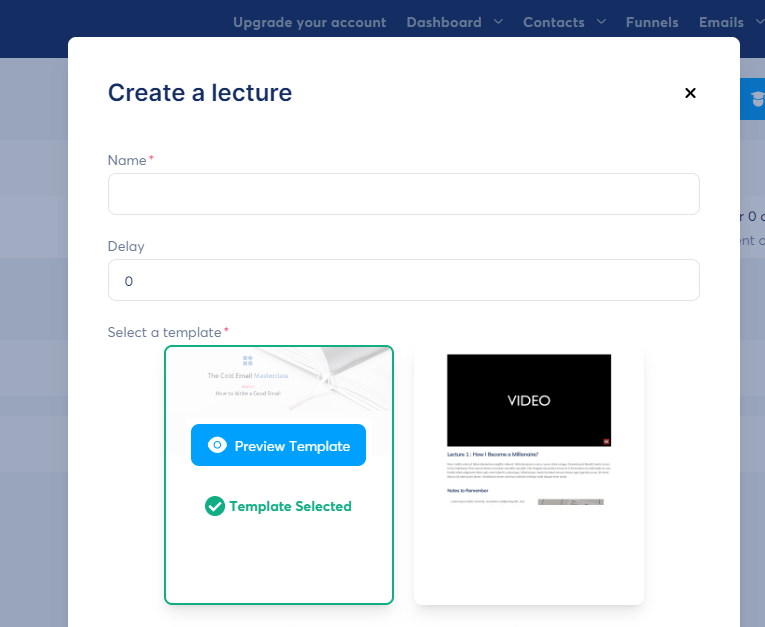
- Create a lecture: Inside your module, click the “Add lecture” button. Fill out the pop-up with the relevant information, such as the name of the lecture and the delay after the previous lecture (if applicable). Choose a template for your lecture and customize it using the course editor. Click “Save” to create your first lecture.
To create additional lectures, repeat these steps or duplicate an existing lecture. - Set up a sales funnel: To sell your online course, create a new sales funnel by navigating to the “Funnels” tab in the main menu. Click on “Create a funnel,” choose the “Sell a product” template, and click “Create.”
- Configure your order form: Navigate to your desired funnel and click on your “Order form.” Choose “Digital product” as the offer type. Under the “Resources” section, click the “+” button, choose “Course” as the type of resource, and select the course you want to sell.
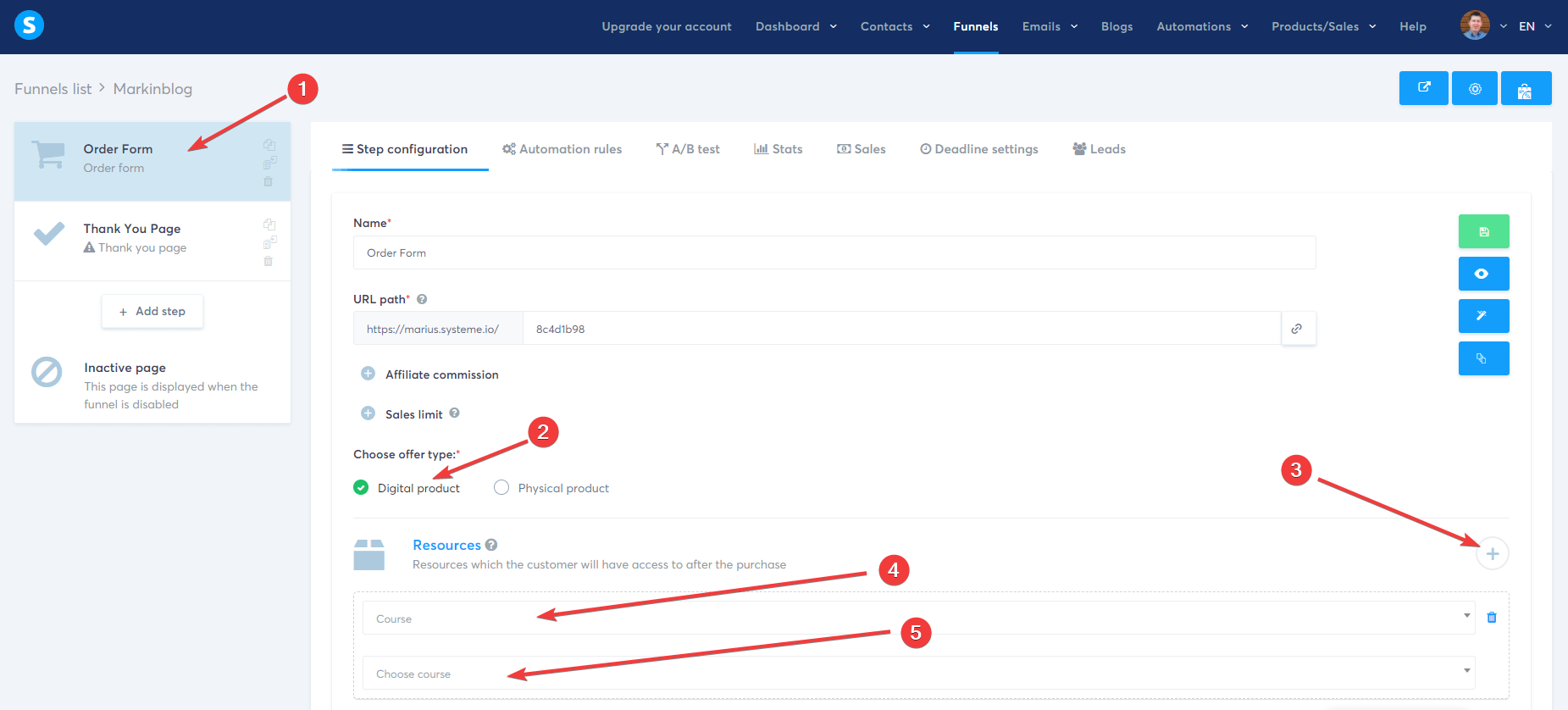
Choose the course access type (Full access or Drip content) and configure any specific day access or expiration dates, if applicable. - Add customer tags (optional): To add a tag to your customers for segmentation and targeted emails, click the “+” icon in the resources section, choose “Tag” as the resource type, and select the desired tag. Remember to save your changes.
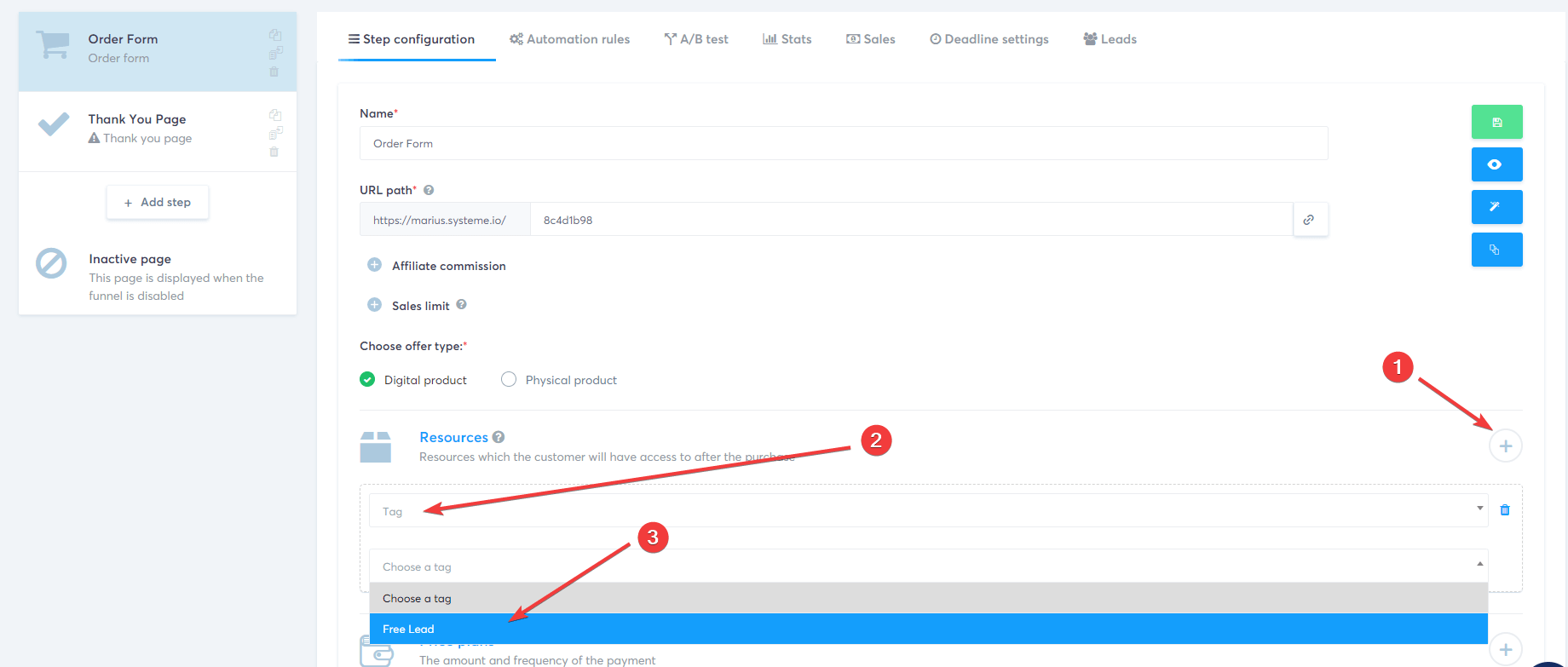
- Save and publish your sales funnel: Once you’ve configured your order form and added any necessary customer tags, click “Save” to save your changes. Click on the “Publish” button in the top right corner to make your sales funnel live.
- Promote your course: Share your sales funnel’s URL with your target audience through email marketing,
7.2. Set up an affiliate program
Encourage others to promote your products or services by setting up an affiliate program with customizable commission rates and tracking.
Setting up your own affiliate program using Systeme.io involves several steps. Follow the instructions below to get started:
Step 1: Create a new funnel
In your Systeme.io account, create a new funnel by following the instructions provided here: https://help.systeme.io/en/articles/2386794-how-to-create-a-new-funnel.
Step 2: Create an order form page
Set up an order form page within your funnel. You can find instructions on how to create an order form page here: https://help.systeme.io/en/articles/2386983-how-to-create-an-order-form-page.
Step 3: Configure affiliate program settings
- In your Systeme.io account, go to Menu >> Settings >> Affiliate program settings.
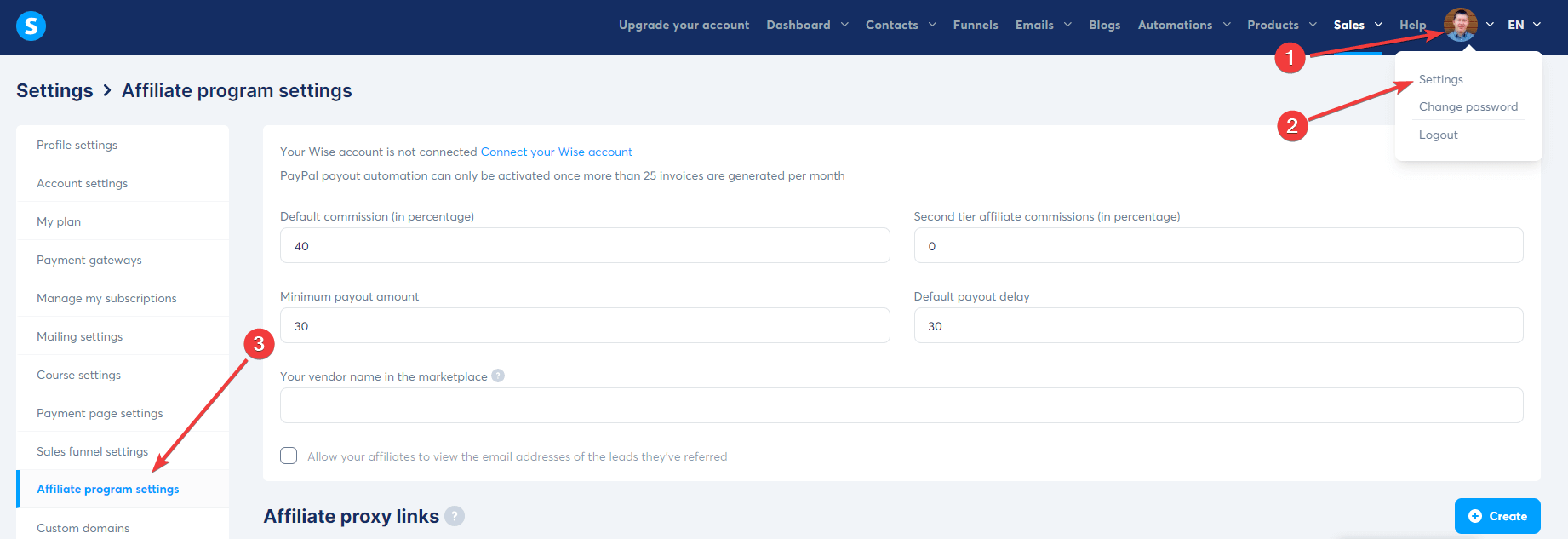
- Fill in the following fields:
- Default commission (%): Set the percentage of commission you want to give to your affiliates.
- Minimum payout amount: Set the minimum amount an affiliate must earn before they can receive payment.
- Default payout delay: Set the number of days before a commission can be paid out to an affiliate.
- Second-tier affiliate commissions (%): Set the percentage of commission for second-tier affiliates (if you want to offer multi-level commissions).
Step 4: Customize settings for your order form page
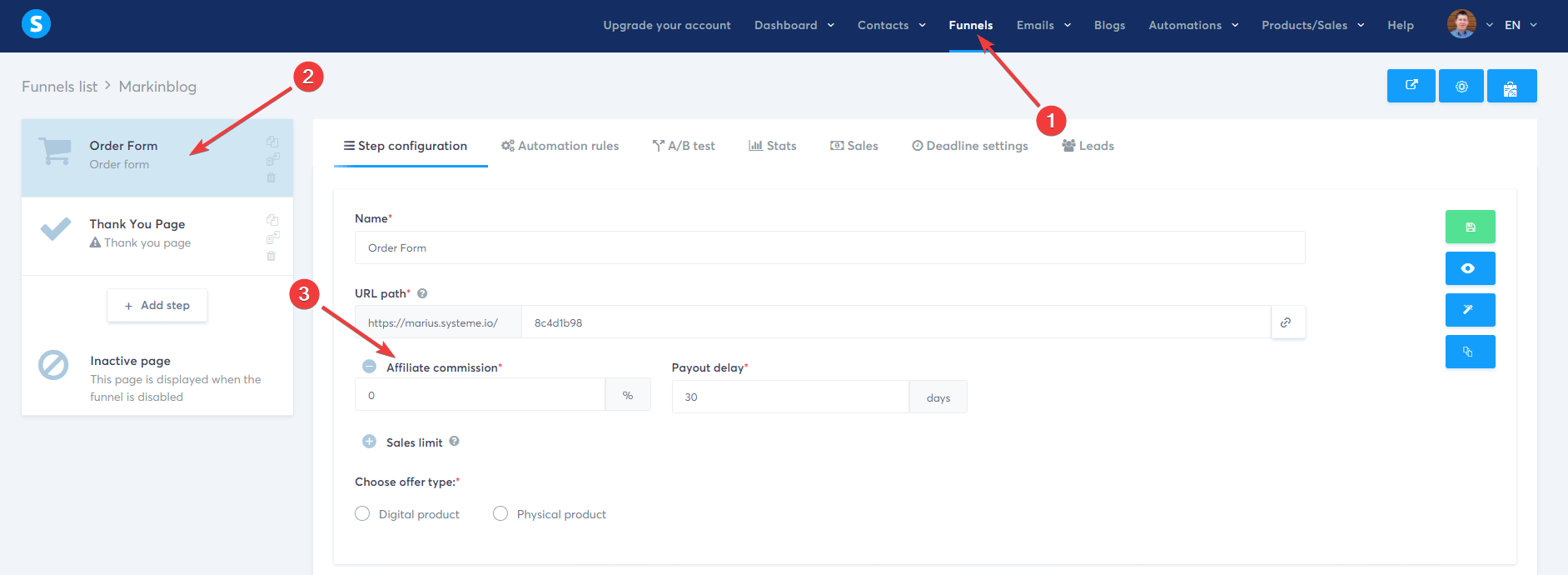
- Go to your funnel and click on the “Order form” page.
- Click on “Settings”.
- Adjust the following settings if needed:
- Commission amount for the product on the sales page.
- Payment period for affiliate commissions.
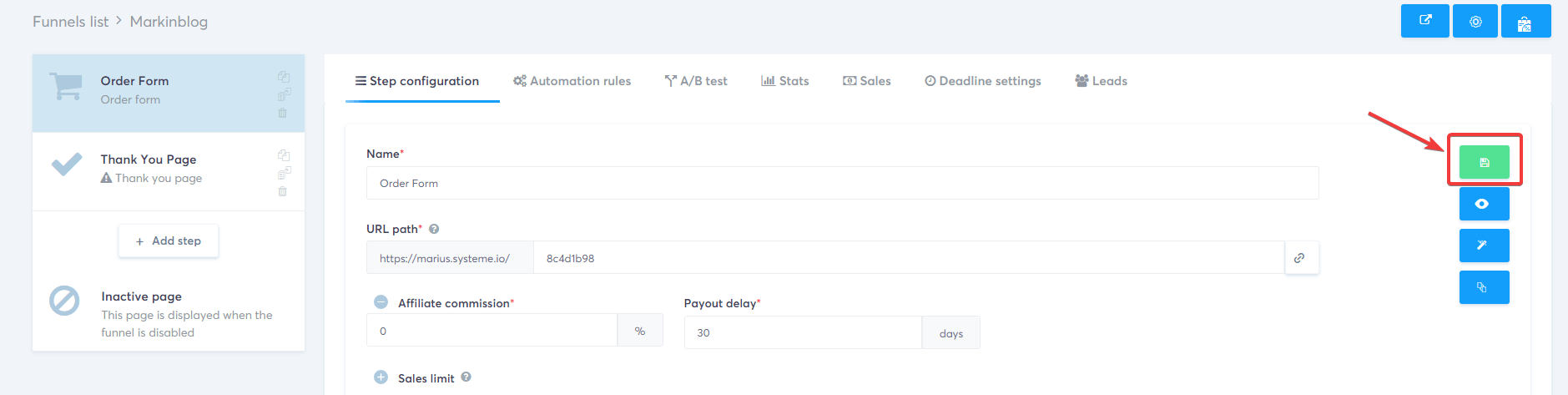
- Save your changes by clicking on the green icon with a floppy disk.
Step 5: Set up a 0% commission if you don’t want to offer commissions for specific pages If you don’t want to offer commissions for a specific sales funnel, set the affiliate commission to “0%” on the respective payment page.
Conclusion and Additional Help
So as you can see, Systeme.io is a powerful platform that simplifies the process of creating, marketing, and selling your online products and services.
It is designed to be user-friendly and efficient, helping you maximize your potential for success.
For further assistance and guidance, visit the Systeme.io Help Center at https://systeme.io/help, where you can access a wealth of resources, including an extensive knowledge base and informative video tutorials.
Should you require personalized support, the dedicated Systeme.io support team is ready and eager to help.
Don’t hesitate to reach out and make the most of this incredible platform!